Product Description
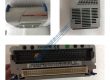
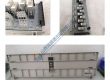
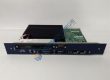
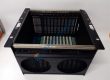
The Allen-Bradley 1394C-SJT10-D is a powerful digital AC multi-axis servo control system module, belonging to the Allen-Bradley 1394C (Compact) series. This module serves as the central control unit for advanced motion applications, capable of commanding multiple servo motors simultaneously. The “C” in its part number signifies its compact design, which provides a smaller footprint compared to the standard 1394 series, making it highly suitable for installations with limited cabinet space. The “D” suffix typically indicates that this variant is designed for direct connectivity with a DeviceNet communication network, enabling seamless integration into distributed control architectures where DeviceNet is the preferred fieldbus.
The Allen-Bradley 1394C-SJT10-D accepts 360-480V AC, three-phase input power, and efficiently converts it to a 530-680V DC link voltage. It delivers a continuous power output of 8/10 kW (at nominal 360/480V AC input, respectively), making it capable of controlling multiple high-power servo motors. This module is known for its high efficiency (up to 99%) and includes an active soft-start inrush current limit for DC link charging, which enhances reliability and extends component life. The Allen-Bradley 1394C-SJT10-D is a crucial component for applications demanding precise, synchronized, and powerful motion control, particularly those leveraging the DeviceNet communication protocol for system integration.
Product Parameters
The Allen-Bradley 1394C-SJT10-D possesses the following key technical specifications:
| Parameter | Specification |
|---|---|
| Module Type | GMC System Module (Compact) / Servo Controller |
| Input Voltage | 360-480V AC, 3-Phase, 50/60 Hz |
| Input Current | 13.0 A (AC) |
| Continuous Power Output | 8 kW (at 360V AC) / 10 kW (at 480V AC) |
| Peak Power Output | 28 kW |
| DC Link Voltage | 530-680V DC (internal conversion) |
| Efficiency | Up to 99% |
| Program Memory (GML) | Typically 32K (standard for non-Turbo models, check specific documentation for exact value) |
| Communication Interfaces | SCANport, serial (for HIM), DeviceNet |
| Line Loss Ride Through | 20 ms (typical) |
| Internal Shunt Resistor | Built-in (capacity similar to 1394-SJT10-A, may require external shunt for higher regenerative loads) |
| Mounting | Rack-mounted within the 1394C system |
| Form Factor | Compact design compared to standard 1394 modules |
| Certifications | Tested to meet EMC Directive 89/336/EC (EN 50081-2) and Low Voltage Directive 73/23/EEC (EN 61131-2) |
Advantages and Features
The Allen-Bradley 1394C-SJT10-D offers several advantages and features, particularly suited for high-power, compact, and DeviceNet-integrated applications:
- Compact Form Factor: The “C” (Compact) designation provides a smaller physical size, making the Allen-Bradley 1394C-SJT10-D ideal for installations where cabinet space is limited, without compromising on power or performance.
- Integrated DeviceNet Communication: The “D” suffix signifies direct DeviceNet connectivity, allowing for seamless integration into distributed control systems. This simplifies wiring, reduces installation time, and enables high-speed data exchange with other DeviceNet-enabled devices and PLCs.
- High Power Output: With 8/10 kW continuous power, the Allen-Bradley 1394C-SJT10-D can effectively control multiple high-power servo motors, making it suitable for demanding multi-axis machinery.
- Exceptional Efficiency: Up to 99% efficiency minimizes energy consumption and reduces operational costs while also contributing to less heat generation in the control cabinet.
- Robust Diagnostic Capabilities: Provides configurable analog test outputs and detailed diagnostic information accessible via serial port and Human Interface Module (HIM), facilitating rapid troubleshooting and system optimization.
- Active Soft Start: Features an active soft start for DC link charging, limiting inrush currents to protect internal components and extend the module’s lifespan.
- Direct Line Connection: Designed for direct connection to 360-480V AC three-phase power, simplifying wiring and often eliminating the need for external isolation transformers.
Application Areas and Application Cases
The Allen-Bradley 1394C-SJT10-D is well-suited for high-power, high-precision, and space-optimized motion control applications that leverage DeviceNet for system integration:
- Automotive Manufacturing: Control of assembly lines, welding robots, and material handling systems where high power, precision, and robust communication via DeviceNet are required.
- Food and Beverage Processing: Used in packaging machines, filling lines, and conveying systems that demand high throughput and precise synchronization, often in environments where DeviceNet is a common network.
- Plastics and Rubber Machinery: Control of injection molding machines, extruders, and blow molding equipment, benefiting from precise motion control and robust communication for process optimization.
- Textile Machinery: High-speed looms, knitting machines, and winding equipment that require powerful and synchronized servo control, often integrated into larger DeviceNet-based automation systems.
- Specialty Machine Building: For custom-built, high-power machines where a compact footprint and DeviceNet connectivity are critical design considerations.
Application Case: In a modern automotive assembly plant, a new robotic welding cell was being designed with severe space constraints for the control cabinets. The plant’s existing infrastructure heavily relied on DeviceNet for communication between PLCs and various devices. The Allen-Bradley 1394C-SJT10-D system module was chosen to control the six servo motors governing the robotic arm’s movements and the workpiece positioning. Its compact size allowed for efficient cabinet design, while the integrated DeviceNet interface provided seamless, high-speed communication with the plant’s main Rockwell Automation PLC, eliminating the need for additional communication gateways. The 10 kW continuous power output of the Allen-Bradley 1394C-SJT10-D was sufficient to handle the dynamic loads of the robotic arm during rapid welding cycles. This solution contributed to a significant increase in welding accuracy, faster cycle times, and reduced overall system complexity for the plant.