1. Description:
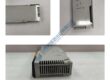
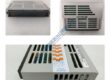
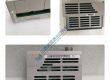
The Honeywell 2108B2001N is a Searchpoint Optima Plus Point Infrared (IR) Flammable Gas Detector, specifically designed for Hydrocarbon gas detection and holds ATEX certification. It is a sophisticated fixed point gas detector intended for continuous, non-contact monitoring of combustible hydrocarbon gases (including methane, propane, butane, ethylene, and various solvents) within potentially explosive atmospheres. In contrast to older catalytic bead detectors, the Optima Plus utilizes advanced infrared absorption technology, providing significant advantages in challenging industrial environments. This particular model is constructed with a durable 316 stainless steel housing and offers a versatile 4-20mA output (auto-sensing sink or source), allowing for direct and flexible integration with industrial control systems. The “N” in the part number often indicates a specific configuration for the hydrocarbon version with standard 4-20mA output and ATEX approval.
2. Application Scenarios:
Consider a large chemical processing plant with various reactors, storage tanks, and extensive piping networks, all of which present a continuous risk of flammable hydrocarbon leaks. The plant experiences diverse environmental conditions, from high humidity to corrosive chemical fumes. Deploying the Honeywell 2108B2001N Searchpoint Optima Plus detectors extensively across these critical areas—such as near pump seals, valve manifolds, and around process vessels—would provide crucial safety monitoring. Their infrared technology ensures rapid and fail-to-safe detection of hydrocarbon leaks, even in atmospheres that might be oxygen-deficient or contain substances that would “poison” traditional catalytic sensors (like silicones or sulfur compounds). The rugged 316 stainless steel construction offers excellent resistance to corrosion and harsh chemicals. This solution directly addresses the pain points of maintaining reliable gas detection in corrosive, complex, and potentially oxygen-deficient environments, ensuring personnel safety, protecting valuable assets, and maintaining continuous production.
3. Parameter:
Main Parameters Value/Description Product Model: Honeywell 2108B2001N Manufacturer: Honeywell Analytics (part of Honeywell) Product Category: Fixed Point Infrared Flammable Gas Detector Product Line: Honeywell Searchpoint Optima Plus Sensor Type: Point Infrared (IR) absorption Gas Types Detected: Hydrocarbons (e.g., Methane, Ethane, Propane, Butane, Ethylene, various solvents). Over 100 gas and vapor calibrations are available. Measuring Range: 0-100% LEL (Lower Explosive Limit) Output Signal: 4-20mA analog output (auto-sensing sink or source); Optional HART® over 4-20mA (with specific versions); Optional Multidrop Modbus RS485 (via XNX or DX100(M) transmitter) Inhibit Signal: 1-3mA (Default 2mA) Warning Signal: 0-6mA (Default 3mA) Fault Signal: 0mA (HART® units adjustable to 1mA) Over Range Signal: 20-21.5mA (Default 21mA) Supply Voltage: 18-32V DC (24V DC nominal), < 4.5W max power consumption Response Time (T90): Less than 4 seconds (typically < 3 seconds for T50, Methane) Operating Temperature: -40°C to +65°C (-40°F to +150°F) Housing Material: 316 Stainless Steel Ingress Protection: IP66 / IP67 (dust tight and protected against powerful water jets/immersion up to 1m) Weight: Approximately 1.6 kg Approvals: ATEX, IECEx, UL, FM/CSA, MED (Marine Equipment Directive), CCCF & CU-TR Ex (specific to the 2108B2001N configuration, ATEX is confirmed). Safety Integrity Level (SIL): IEC61508 Safety Integrity Level 2 (independently assessed by TÜV) Key Features: Failsafe operation, fast response, reduced routine maintenance, immune to catalytic poisons, long operating life, works in inert atmospheres, self-compensating optics, dynamic heating control (for condensation), integral event logging, advanced diagnostics.

4. Technical Principles and Innovative Values:
The Honeywell 2108B2001N Searchpoint Optima Plus embodies cutting-edge technical principles and offers significant innovative value, making it a market leader in flammable gas detection:
- Innovation Point 1: Dual-Compensated (4-Channel) Infrared Absorption for Unmatched Stability and Fail-Safe Operation: The Optima Plus utilizes a highly sophisticated dual-path infrared absorption principle, often referred to as a “4-channel optics-block.” It employs two specific IR wavelengths: a measurement wavelength absorbed by the target gas, and a reference wavelength that is not. The innovative value lies in its advanced compensation capabilities. Beyond compensating for environmental factors like dust, fog, or optical contamination (similar to 2-channel designs), the 4-channel design also actively compensates for long-term component drift of the infrared source and detectors. This ensures exceptionally stable, accurate readings over time and, crucially, a fail-to-safe operation. If the optical path is severely obstructed (e.g., by heavy dust buildup or complete failure), the detector will go into a pre-defined fault condition (e.g., 0mA), immediately alerting personnel to a potential problem rather than providing a false “no gas” reading. This fundamental safety principle is a major advantage.
- Innovation Point 2: Inherent Immunity to Catalytic Poisons and Oxygen Deficiency: A profound innovation of the Optima Plus is its operational principle, which is based on infrared absorption rather than catalytic combustion. This means the detector does not require oxygen to function and is inherently immune to poisoning or inhibition by substances that would typically degrade or destroy traditional catalytic pellistor detectors (such as silicones, sulfur compounds, halogenated hydrocarbons, or heavy metals). This immunity ensures sustained accuracy, dramatically extends sensor lifespan, and eliminates the need for frequent sensor replacement or costly specialized maintenance due to atmospheric contaminants, leading to significantly lower lifetime operational costs and higher reliability in harsh environments.
- Innovation Point 3: Advanced Diagnostics, Dynamic Heating, and Minimal Maintenance: The Optima Plus incorporates sophisticated internal diagnostics, including continuous monitoring of optical cleanliness and alignment. It provides early warnings for contaminated optics, allowing for proactive cleaning before a fault condition occurs. Features like dynamic heating control actively prevent condensation buildup on the optics, ensuring clear vision in changing environmental conditions. This level of self-monitoring and proactive diagnostics, combined with the inherently stable IR technology, drastically reduces the need for routine maintenance (e.g., less frequent bump tests and calibrations compared to catalytic sensors) and minimizes false alarms, maximizing detector uptime and operational integrity for critical plant assets.
5. Application Cases and Industry Value:
In a vast municipal wastewater treatment plant, anaerobic digesters produce biogas (primarily methane), which poses a continuous explosion risk. The environment is often humid, and H2S (hydrogen sulfide) can be present, which can poison catalytic sensors. The Honeywell 2108B2001N Searchpoint Optima Plus detectors were deployed strategically around the digester tanks, gas collection points, and biogas lines. Their infrared technology ensured rapid and accurate detection of methane leaks (CH4 is a hydrocarbon) without being affected by H2S or oxygen levels. The 316 stainless steel housing provided excellent corrosion resistance to the humid, potentially corrosive atmosphere. The fail-safe design meant that any obstruction or fault would be immediately signaled. This implementation provided continuous, reliable monitoring, giving operators crucial early warnings of leaks. This directly led to enhanced safety for personnel working in a high-risk environment, prevented costly explosions, and ensured compliance with safety regulations for biogas facilities.