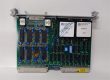
The WESTINGHOUSE 4256A64G02 is identified as a CPU/Control Board or a Control Board, primarily used within Westinghouse’s industrial automation and process control systems, particularly the Ovation Distributed Control System (DCS). It’s a key electronic component for industrial automation.
Product Overview
The WESTINGHOUSE 4256A64G02 is a crucial electronic component, specifically a CPU (Central Processing Unit) or Control Board. It is an integral part of Westinghouse’s (now often associated with Emerson’s Ovation DCS, given the acquisition of Westinghouse Process Control by Emerson) industrial automation and control systems. This board serves as the “brain” or a significant processing unit within these systems, executing control logic, managing data, and facilitating communication for various industrial processes. Its design emphasizes reliability and performance, typical of components used in mission-critical applications within power plants, steel mills, and other heavy industries. The 4256A64G02 is often described as a “12-slot control board,” suggesting it interfaces with or manages multiple other modules or components within a larger control system architecture. It enables the robust and precise control necessary for modern manufacturing processes and infrastructure.
Technical Specifications (Based on available information)
Main Features and Advantages
The WESTINGHOUSE 4256A64G02 control board, as a core component of industrial control systems, offers several significant features and advantages:
Powerful Processing Capabilities: As a CPU/Control Board, it’s equipped with a powerful processor designed for fast and efficient execution of complex control logic. This ensures real-time control and responsiveness critical for industrial processes.
Robust and Reliable Operation: Engineered for industrial environments, the board is built for robustness and reliability. This is paramount for maintaining continuous operation in critical applications, minimizing downtime and enhancing system stability.
Scalability and Flexibility (12-Slot Design): The “12-slot” description suggests it can interface with a wide range of input/output (I/O) modules and other communication interfaces. This allows for flexible system expansion and customization to meet diverse industrial demands and varying I/O capacities.
Integration with DCS Systems (Ovation): Its compatibility with the Westinghouse Ovation DCS indicates it’s designed for seamless integration within a distributed control system architecture. This enables centralized monitoring, control, and data management across large and complex industrial facilities.
High Performance for Automation: The board provides the necessary processing power and communication interfaces to manage modern manufacturing processes effectively, from automotive and food processing to packaging and material handling.
Support for Critical Applications: Given its use in systems like Ovation DCS, the 4256A64G02 is suited for applications where precision, speed, and reliability are essential, such as power generation, petrochemicals, and other heavy industries.

Application Field
The WESTINGHOUSE 4256A64G02 CPU/Control Board is primarily utilized in large-scale industrial automation and process control systems where high reliability, real-time control, and distributed architecture are essential. Its main application field is within Westinghouse’s (and subsequently Emerson’s) Ovation Distributed Control System (DCS).
Key industries and applications include:
Power Generation: This is a primary application. The 4256A64G02 would be used in the control systems of power plants (coal, gas, nuclear, etc.) to manage various processes like boiler control, turbine control, generator synchronization, and plant-wide optimization. It ensures efficient and safe operation of critical power generation assets.
Iron and Steel Mills: In the metallurgy industry, the board controls complex processes involved in steel production, including blast furnaces, rolling mills, and continuous casting, where precise temperature, pressure, and material flow control are vital.
Petrochemical and Chemical Processing: Used in large chemical and petrochemical plants to manage complex reaction processes, distillation columns, and safety interlocks, ensuring safe and efficient production of chemicals and fuels.
Industrial Automation and Manufacturing: More broadly, it finds application in various sectors of industrial automation that require a robust and scalable control solution, such as automotive manufacturing lines, large-scale food processing facilities, and complex material handling systems.
Essentially, the 4256A64G02 is employed in any industrial environment that relies on a high-performance Distributed Control System (DCS) for the monitoring, control, and optimization of critical and continuous processes.
Related Products
The WESTINGHOUSE 4256A64G02 CPU/Control Board is a core component within the Westinghouse (now Emerson) Ovation Distributed Control System. Therefore, related products would include other modules and components of this DCS, as well as general industrial automation hardware.
Emerson Ovation Distributed Control System (DCS) Components:
- Ovation I/O Modules: Various digital and analog input/output modules (e.g., 1B30023H01 I/O Terminator Assembly Module) that connect to field devices and communicate with the control board.
- Power Distribution Boards: Modules like the 1X00102H01 Power Distribution Board, which supply power to the control boards and other modules within the system.
- Communication Interface Modules: Boards that facilitate communication between the Ovation DCS and other systems, networks, or devices (e.g., PC Multibus Highway Controller Board like 3A99166G0).
- Processor Modules/Other Control Boards: Other CPU or control modules within the Ovation system, potentially for redundancy or different control functions.
- Operator Workstations and Engineering Stations: The human-machine interface (HMI) and software used to program, monitor, and operate the Ovation system, which the 4256A64G02 helps control.
General Industrial Automation Hardware:
- Industrial Power Supplies: For providing reliable power to the control system.
- Industrial Networking Equipment: Switches, routers, and cables for communication within the DCS and to other enterprise systems.
- Control Cabinets and Enclosures: To house and protect the control boards and other modules in industrial environments.
- Field Devices: Sensors, transmitters, valves, actuators, and motors that the DCS monitors and controls.
Other Legacy Westinghouse/Eaton-Cutler Hammer Components: While the 4256A64G02 is specifically a control board, Westinghouse also produced various electrical distribution and protection products. However, these are less directly related to the function of this specific control board compared to the Ovation DCS components.
Installation and Maintenance
Pre-installation preparation: Before installing the WESTINGHOUSE 4256A64G02 CPU/Control Board, it is absolutely critical to ensure that all power to the control cabinet or chassis where it will be installed is completely de-energized and locked out according to established safety procedures (LOTO – Lockout/Tagout). Consult the specific Westinghouse Ovation DCS installation manual for detailed instructions, wiring diagrams, and safety warnings. Ensure the chassis slot is clean and free of dust or debris. Handle the board by its edges to prevent electrostatic discharge (ESD) damage; use appropriate ESD-protective gear (e.g., wrist strap, mat). Verify that the mounting hardware and any required connectors or backplane slots are compatible and clean. Do not force the board into the slot, as this can damage pins. Familiarize yourself with the system’s power requirements and ensure that the power supply to the chassis is stable and correctly rated.
Maintenance recommendations: Maintenance for the WESTINGHOUSE 4256A64G02 CPU/Control Board primarily involves maintaining a clean, stable environment and regular functional checks, as the board itself is typically a sealed electronic component not requiring user-level repair.
- Environmental Control: Ensure the control cabinet’s temperature and humidity remain within the specified operating ranges. Good ventilation and proper air filtration are crucial to prevent overheating and dust accumulation.
- Cleaning: Periodically inspect the board for dust or debris accumulation. If cleaning is necessary, use compressed air (non-condensing, oil-free) or a soft, anti-static brush. Never use liquids directly on the board.
- Connection Integrity: Regularly check that the board is securely seated in its slot and that all connections (e.g., to the backplane, communication cables) are firm and free from corrosion.
- Diagnostic Monitoring: Monitor system diagnostics and alarms provided by the Ovation DCS. Any warnings or fault indicators related to the control board should be investigated immediately.
- Firmware Updates: If applicable and recommended by Emerson/Westinghouse, ensure that firmware for the board is kept up to date according to manufacturer guidelines to address any bugs or improve performance.
- Redundancy Checks: In redundant Ovation systems, regularly verify the health and status of both primary and backup control boards to ensure failover capabilities are active.
- Replacement: If the board fails or is suspected to be faulty, replacement with a genuine or certified refurbished part is usually the course of action, as component-level repair is highly specialized and often not recommended by the OEM. Always follow manufacturer’s replacement procedures.
Product Guarantee
The WESTINGHOUSE 4256A64G02 CPU/Control Board, while potentially discontinued by the original manufacturer, generally falls under the product guarantee policies of its current suppliers or repair providers. For new or surplus items, reputable industrial automation suppliers (like Radwell International) often provide their own warranties (e.g., a 2-year warranty) as the original manufacturer’s warranty may no longer apply.
When purchasing or obtaining this board, it is crucial to clarify the warranty provided by the vendor. Typically, this guarantee ensures that the product will be free from defects in material and workmanship for a specified period from the date of purchase. For products undergoing repair, the repair service provider will usually offer a warranty covering the repair work performed.
Key aspects of such guarantees often include:
- Coverage: Protection against manufacturing defects and material faults.
- Remedy: At the discretion of the supplier/repairer, this usually involves repair or replacement of the defective product. Replacement parts or products are typically new or serviceably used, comparable in function and performance.
- Limitations: Warranties usually do not cover damage due to misuse, mishandling, improper installation, accidents, or operation outside recommended conditions. Normal wear and tear or cosmetic damage not affecting functionality are also typically excluded.
- Claim Process: Requires obtaining a return merchandise authorization (RMA) number before sending the product for service.
- Support: Suppliers usually provide technical support for their products, aiding in installation, configuration, and troubleshooting.