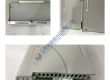
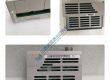
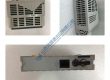
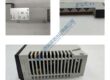
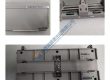
The ISOVOLT 450M2/0.4-1.0HP is a specialized X-ray tube housing, part of the ISOVOLT series (originally Seifert, now part of Waygate Technologies, a Baker Hughes business). This designation indicates a high-power X-ray tube designed for industrial non-destructive testing (NDT), particularly for radiography and computed tomography (CT) applications.
Let’s break down the model number:
- ISOVOLT: This is the brand name for a line of high-quality industrial X-ray systems, specifically X-ray tubes and generators, known for their robustness and precision in NDT applications.
- 450: This refers to the maximum tube voltage or peak kilovoltage (kV) that the X-ray tube can handle, which is 450 kV. This high voltage allows for deep penetration of dense materials, making it suitable for inspecting thick metal castings, welds, and other industrial components.
- M2: This is a specific designation within the ISOVOLT 450 series that indicates a particular design or generation of the X-ray tube. “M2” often refers to a model optimized for specific applications or featuring particular mechanical/electrical interfaces.
- 0.4-1.0HP: This part refers to the focal spot sizes of the X-ray tube.
- 0.4 mm: This is the small focal spot size. A smaller focal spot produces sharper X-ray images with better resolution and detail, crucial for detecting fine defects.
- 1.0 mm: This is the large focal spot size. A larger focal spot allows for higher X-ray power (mA) and shorter exposure times, useful for thicker materials or when throughput is a priority, though at the expense of some image sharpness.
- HP: This indicates High Power, suggesting that even the larger focal spot can handle significant power output for demanding applications.
Product Overview
The ISOVOLT 450M2/0.4-1.0HP is a bipolar, oil-cooled, directional X-ray tube with a double focus. This means:
- Bipolar: It uses two high-voltage connections (positive and negative) from the X-ray generator.
- Oil-cooled: The X-ray tube is immersed in dielectric oil within the tube housing for efficient heat dissipation, enabling continuous and high-power operation.
- Directional: The X-ray beam is emitted in a specific direction, typically with a defined emergent beam angle (e.g., 40 degrees), suitable for traditional radiography.
- Double focus: It has two distinct focal spots (0.4 mm and 1.0 mm), allowing the user to select between high resolution (small focal spot) and high power/throughput (large focal spot).
It is typically paired with an ISOVOLT generator (such as the ISOVOLT Titan E or Titan|neo series) which provides the necessary high voltage and current to operate the tube.
Key Technical Specifications
Main Features and Advantages
- High Penetration Power: With a maximum tube voltage of 450 kV, it can penetrate very thick and dense materials, making it indispensable for inspecting heavy industrial components.
- Dual Focal Spot (0.4 mm and 1.0 mm): Offers flexibility between high image resolution (for detecting small defects) and high power/throughput (for faster inspections or thicker materials).
- Robust Metal-Ceramic Construction: Designed for durability and long lifespan in demanding industrial environments. Metal-ceramic tubes offer better dose rates and stability compared to glass tubes.
- Oil Cooling: Ensures efficient heat dissipation, allowing for continuous operation at high power levels without overheating.
- High Dose Rate and Stability: When paired with a suitable ISOVOLT generator, it provides a very stable and reproducible X-ray output, crucial for consistent inspection results and quantitative analysis (e.g., CT).
- Low Ripple: The generator-tube combination ensures extremely low ripple in the high voltage, leading to optimal material penetration and image contrast.
- Versatility: Suitable for a wide range of industrial radiographic and radioscopic inspection tasks, including film, digital radiography (DR), and computed radiography (CR) applications, as well as high-precision CT scanning.

Application Field
The ISOVOLT 450M2/0.4-1.0HP X-ray tube housing is primarily used in the field of Industrial Non-Destructive Testing (NDT). Its high voltage and dual-focal spot capabilities make it suitable for inspecting a variety of materials and components.
Common applications include:
- Aerospace Industry: Inspection of turbine blades, critical structural components, and castings for defects.
- Automotive Industry: Quality control of engine blocks, aluminum castings, and welds.
- Heavy Fabrication and Welding: Inspection of thick welds and large metal structures in shipbuilding, bridge construction, and pressure vessel manufacturing.
- Casting Inspection: Detection of porosity, inclusions, cracks, and other internal defects in metal castings (e.g., steel, iron, aluminum).
- Oil & Gas Industry: Examination of pipes, fittings, and welds for integrity and defects in pipelines and processing equipment.
- Power Generation: Inspection of components in power plants, including those for conventional and nuclear facilities.
- Research and Development: Material science, metallurgy, and advanced engineering studies requiring high-energy X-ray imaging.
- Calibration of Detectors/Dosimeters: Its stable and reproducible output makes it useful for calibrating X-ray detectors and dosimetry equipment.
Related Products
The ISOVOLT 450M2/0.4-1.0HP is a component of a complete X-ray inspection system. Key related products include:
- ISOVOLT X-ray Generators: Such as the ISOVOLT Titan E or ISOVOLT Titan|neo series. These generators supply the high voltage and tube current to the X-ray tube and typically include control panels, safety interlocks, and intelligent warm-up programs.
- High-Voltage (HV) Cables: Specialized cables (often 225 kV rated) with specific connectors are needed to connect the generator to the X-ray tube housing.
- Oil Cooling Unit / Chiller: An external chiller or closed-loop cooling system is essential to circulate and cool the dielectric oil within the tube housing, dissipating the significant heat generated during X-ray production.
- Control Console/Software: A control unit (e.g., desktop control, 19″ rack mount, or PC-based software like Rhythm Radiography Software Suite) to set X-ray parameters (kV, mA, exposure time), monitor system status, and manage warm-up routines.
- Radiation Safety Equipment:
- X-ray Shielding: Lead-lined enclosures, rooms, or cabinets to contain X-ray radiation.
- Warning Lamps and Alarms: To indicate X-ray ON status.
- Interlock Systems: Safety devices for doors, emergency stops, etc., to prevent exposure.
- Dosimeters: Personal dosimeters for monitoring radiation exposure of personnel.
- X-ray Detectors:
- Digital Radiography (DR) Detectors: Flat panel detectors (e.g., DXR series) for real-time digital imaging.
- Computed Radiography (CR) Scanners: For phosphor imaging plates that are then read by a scanner (e.g., CRxFlex, CRxVision).
- X-ray Film: For traditional film-based radiography.
- Manipulators and Robotics: For automated part positioning during inspection, especially in CT systems.
- Collimators and Shutters: To shape and limit the X-ray beam, reducing scatter and improving image quality.
Installation and Maintenance
Installation and maintenance of the ISOVOLT 450M2/0.4-1.0HP must be performed by highly trained and certified personnel, strictly following the manufacturer’s instructions and all applicable radiation safety regulations.
Installation (General Guidelines):
- Safety Precautions: Ensure the installation area complies with all radiation safety requirements, including shielding, interlocks, and warning systems.
- Mounting: Securely mount the X-ray tube housing to a suitable stand, manipulator, or system frame. Consider its weight and the need for precise positioning.
- High Voltage Connections: Connect the HV cables from the generator to the tube housing, ensuring proper seating and sealing to prevent electrical arcing.
- Cooling System Connection: Connect the oil lines from the external cooling unit to the tube housing, ensuring proper flow and leak-free connections. Verify the cooling system is operational and circulating oil at the specified flow rate and temperature.
- Control and Communication: Connect the tube housing to the generator and control console via the appropriate communication cables.
- Warm-up Procedures: After installation or extended periods of inactivity, the X-ray tube requires a controlled warm-up procedure (often automatic, initiated by the generator) to outgas the tube and condition the filament/anode. This is crucial for tube longevity.
- System Calibration: Perform necessary calibrations (e.g., kV and mA calibration) and beam alignment checks.
Maintenance (General Guidelines):
- Routine Inspection: Regularly inspect the tube housing, HV cables, and cooling lines for any signs of leaks, damage, or wear.
- Cooling System Maintenance: Monitor cooling oil levels, quality, and flow rates. Replace or filter oil as recommended by the manufacturer. Clean heat exchangers in the chiller.
- Warm-up Cycle Adherence: Always follow the recommended warm-up procedures before operating the tube at high power, especially after it has been off for a significant period. This prevents damage to the tube.
- Regular Cleaning: Keep the external surfaces of the tube housing clean, especially around the high-voltage connections and the X-ray window.
- Performance Checks: Periodically verify the X-ray output (dose rate, stability) using appropriate dosimetry equipment.
- Preventive Maintenance: Follow the manufacturer’s recommended preventive maintenance schedule, which may include checks of electrical connections, cooling components, and safety interlocks.
- Service by Certified Personnel: Any internal maintenance or significant repair should only be performed by manufacturer-certified service technicians due to the high voltages and radiation hazards involved.