
Description
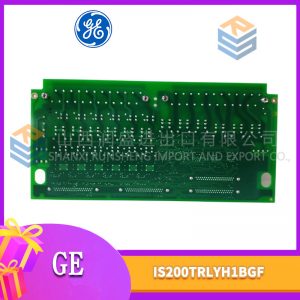
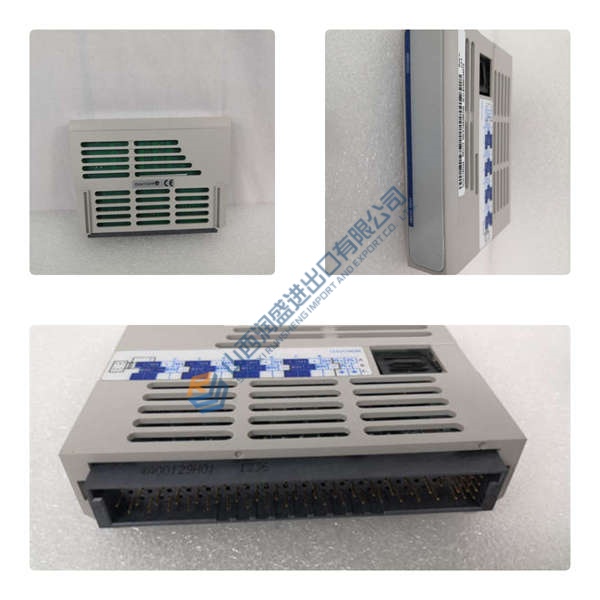
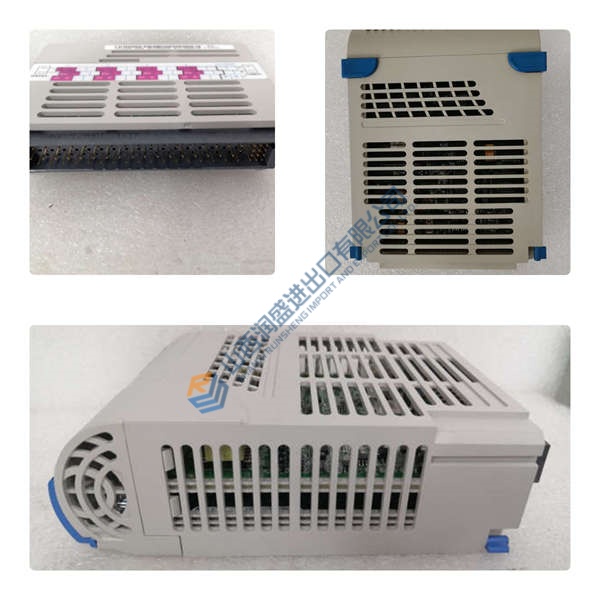
- Product Model: IS220PDIAH1A
- Manufacturer: GE
- System Platform: Mark VIe
- Power Supply Voltage: 28 V DC nominal (minimum 27.4 V DC at input), with tolerance for transients to ensure stable wetting and logic operation.
- Power Consumption: Typically under 10 W, minimizing thermal contribution in multi-pack control enclosures.
- Operating Temperature Range: -30 °C to +65 °C, industrial extended range for reliable performance in turbine halls or outdoor installations.
- Storage Temperature Range: -40 °C to +85 °C, permitting secure long-term storage without component degradation.
- Humidity Range: Up to 95% non-condensing, suitable for high-humidity power or process environments.
- Communication Interfaces: Dual RJ-45 10/100 Mbps Ethernet ports, supporting redundant IONet with full-duplex deterministic communication.
- Discrete Input Channels: 24 contact inputs, accepting dry contacts or powered signals with wetting voltage provided by the pack.
- Contact Wetting Voltage: 32 V DC nominal (derived from pack supply), ensuring reliable closure detection for low-current contacts.
- Input Isolation: Optical isolation up to 1500 V between inputs and logic/electronics, critical for noise rejection and personnel safety.
- Input Voltage Levels: Supports multiple levels via compatible terminal boards (e.g., TBCI series H1/H2/H3 variants for 24/125/250 V DC sensing).
- Mounting Type: Plugs onto discrete input terminal boards (e.g., STCI or TBCI series) via DC-37 connector, with DIN-rail or panel options for vibration resistance.
- Environmental Protection: Conformal-coated PCB; rated for Class I, Division 2 hazardous locations (Groups A–D) per relevant standards.
- Certifications and Standards: Compliant with IEC 61000 EMC series, IEC 61131-2, hazardous area approvals, and GE Speedtronic qualification.
- Mean Time Between Failures (MTBF): High (>200,000 hours typical for Mark VIe I/O packs), supporting continuous turbine operation.
- Electromagnetic Compatibility (EMC): Meets industrial immunity/emission requirements, reducing interference near generators or switchgear.
- Diagnostics: Onboard monitoring of input status, wetting supply, and Ethernet health, with fault reporting via IONet for predictive maintenance.
Technical Architecture & Functional Positioning
The IS220PDIAH1A operates as a distributed discrete input pack at the field interface layer of the Mark VIe system. It mounts directly to a terminal board for field contact wiring, scans inputs at high frequency, applies wetting voltage where required, and digitizes states before packaging data over dual redundant IONet Ethernet to the controller. This distributed model confines contact sensing close to the field, shortening wire runs and improving noise immunity in electrically noisy turbine environments.
Core technologies include optical isolators for each input channel to provide galvanic separation, a common processor board shared across Mark VIe I/O packs for consistent diagnostics, and dual Ethernet transceivers enabling TMR configurations where three packs vote on input states for high-integrity protection. The pack supplies its own 32 V DC wetting to dry contacts, eliminating external power needs for many applications and ensuring reliable detection of open/closed states.
These design aspects address prevalent engineering challenges: preventing false readings from contact bounce or EMI, enabling fault-tolerant discrete logic in safety-critical turbine sequencing, and supporting modular replacement without full system shutdown. Integrated self-tests verify wetting voltage, input thresholds, and network connectivity, feeding detailed diagnostics to the HMI for early fault detection.
Typical Application Scenarios
- Deployed in gas and steam turbines for monitoring limit switches, pressure switches, or permissive contacts in startup, shutdown, and protection sequencing.
- Used in combined-cycle plants to interface discrete signals from boiler interlocks, valve positions, or breaker status in coordinated control.
- Serves as replacement in existing Mark VIe installations, preserving IONet topology and compatibility with terminal board variants.
- Supports industrial processes tied to turbine auxiliaries, such as detecting overspeed, vibration trips, or lube oil conditions for safe operation.
- Utilized in hazardous-area setups for reliable contact input in petrochemical or refinery turbine-driven compressors.
Tektronix s4 Sampling Head
Olympus U-SMAD and U-TV1 X Adapters
MKS Instruments Type 170M-27E Digital Readout Unit
Glentek GA4555P-1
Chino ES800-03 Temperature Chart Recorder 18 to 28 degC
HP Agilent 44708A 20 channel Relay Multiplexer
HP Agilent J2499-60011 J2499A ATM/155 MMF *NEW *
McMillan 80D Mass Flow Controller N2 gas 5 L/min
Yaskawa Minertia R02MA20E R ser. Servo Motor w/encoder
AST STEAG MATTSON 2000 RTP Spare Parts 2800
HP 44704A 16-bit High Speed Voltmeter
Cosmicar Pentax 8mm 1:1.4 Auto-IrisTV Lens
Kinetic Systems Vibraplane Air Vibration Isolation Feet
Vexta Fine Step DFR1514A 5-phase driver w/ Warranty
National Instruments FP-TB-10 Dual Ch Terminal Base
Pittman Lo-Cog 9236E234 9700-5954-01 motor GOOD
Advanced Motion Con. B15A20C Brushless PWM Amplifier