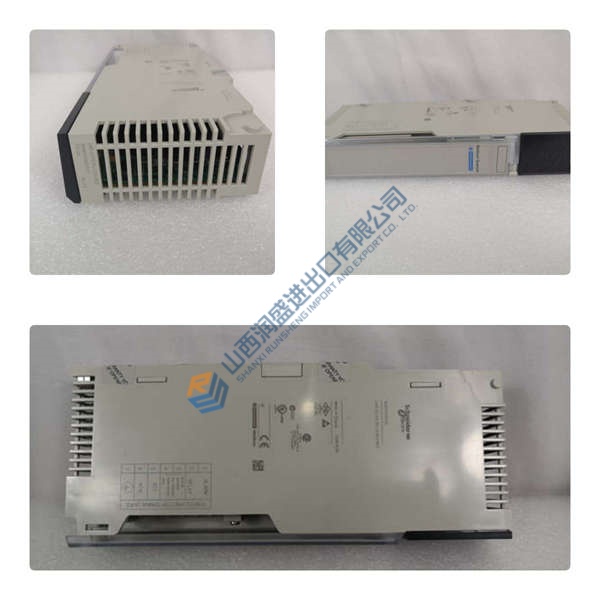
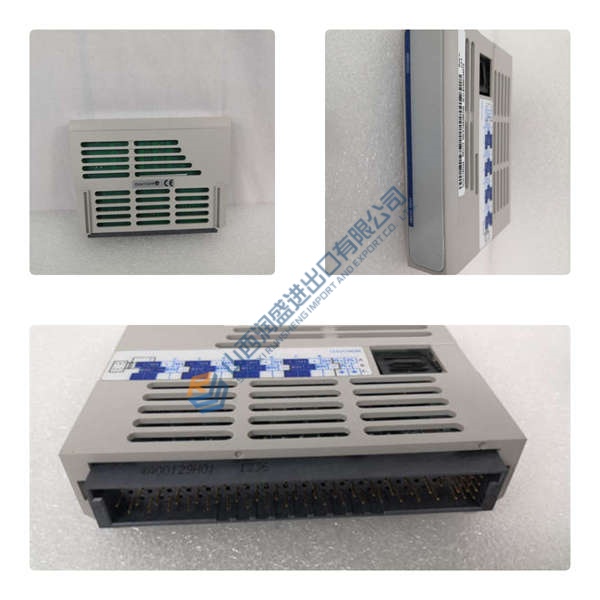
Description
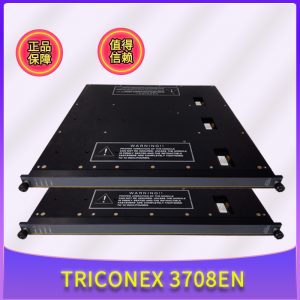
The HCU3703E is designed as a high-integrity controller for safety-critical systems, performing the role of the central processor within a triplex-redundant architecture. In the hierarchical structure of a typical SIS or critical process control system, this module resides at the controller core layer — above field I/O modules but beneath supervisory SCADA gateways or plant-level management systems. Its primary purpose is to execute deterministic safety logic and process automation logic with high reliability, minimal downtime, and fail-safe behavior.
Each of the three channels operates independently, with its own 32-bit CPU and local memory, communicating via a protected backplane bus that supports galvanic isolation and high-speed data exchange. Cross-channel diagnostics continuously monitor the health and state of each CPU, memory integrity, and backplane communication integrity. Should one channel detect an anomaly — e.g., internal fault, memory corruption, communication timeout — the other two channels automatically perform a bumpless switchover, isolating the faulty channel while maintaining uninterrupted execution of safety logic. This architecture addresses the critical need for zero unscheduled downtime and ensures system integrity even under component-level failures.
The design choices implemented in HCU3703E — such as galvanic isolation, redundant power and communications, watchdog-based self-test, and deterministic cycle timing — directly tackle real-world engineering challenges: electrical noise in industrial environments, EMI from heavy machinery or power conversion devices, power supply instability, and firmware/hardware faults that might otherwise result in dangerous system behavior or unplanned process trips. For industries such as petrochemical, offshore, power generation, or chemical processing — where safety interlocks, emergency shutdowns, and reliability are non-negotiable — this controller provides the robust foundation required by modern safety instrumented systems.
Typical application scenarios:
- Implementation in petrochemical or refining plants for reactor safety logic, flare‑stack shutdown, or emergency depressurization.
- Use in power generation facilities (thermal, nuclear) for turbine overspeed protection, generator fault shutdown, or turbine bypass valve interlocks.
- Deployment on offshore platforms (oil & gas, LNG) where environmental conditions are harsh, EMI levels high, and electrical noise significant — requiring rugged, certified safety controllers.
- Retrofit of legacy SIS (e.g., older Triconex 3000 installations) to modern hardware without re‑engineering safety logic, enabling extended life of existing control systems.
- Integration into chemical batch‑processing systems for pressure, temperature and flow interlocks, providing deterministic safety logic with high availability.
Quality Standards & Testing Procedures
In safety‑instrumented and mission‑critical control systems, reliability and correctness are paramount. Before any HCU3703E is released from stock, it undergoes a comprehensive Standard Operating Procedure (SOP) — a multi-stage validation process to guarantee compliance with factory specifications and functional integrity.
Visual Inspection & Cleaning
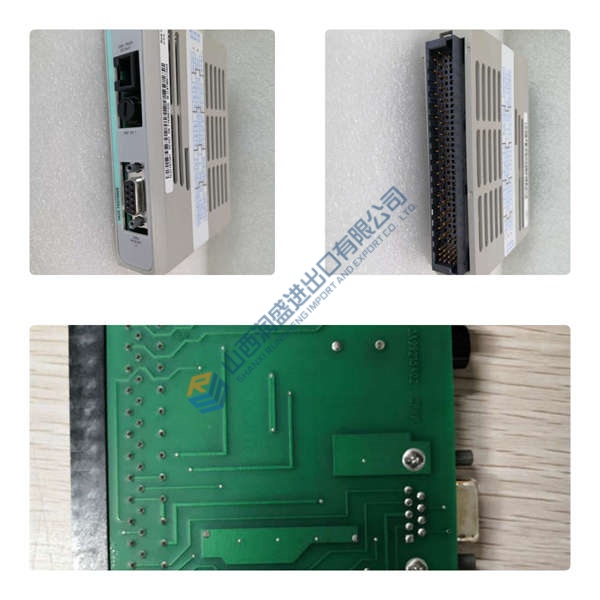
- Thorough inspection of the printed circuit board (PCB) for solder joint quality, evidence of physical damage, component stress marks, oxidation or corrosion.
- Verification of all connectors and backplane edge fingers for wear, contamination, or improper repair traces.
- Cleaning with industrial-grade solvents to remove dust, flux residue, or oils that could impair electrical contact or cause leakage currents.
Live Testing on Authentic Platform
- Continuous powered operation for a minimum of 24 hours on a genuine Triconex 3000/4000 test bench. During this period, voltage, current, temperature, and internal diagnostics are logged to verify stability under nominal load.
- Monitoring of thermal behavior to ensure no overheating or abnormal power draw, especially under worst-case supply voltage and ambient temperature conditions.
Functional Verification
- Simulation of I/O activity across representative analog, digital, and communication modules to verify correct handling by all three channels.
- Execution of diagnostic routines to provoke fault conditions (channel fault injection simulation), verifying bumpless switchover and correct fault isolation.
- Communication diagnostics when connected to gateway modules (e.g., Modbus TCP or PROFIBUS DP), ensuring zero packet loss, correct message timing, and accurate protocol handling.
Agilent E6601A WIRELESS COMMUNICATIONS TEST SET PANEL
Panasonic AC Servo Motor 1.0KW MSM102Q1C
GOOCH HOUSEGO QS27-4S-B-RS5 ROFIN SINAR LASER Q SWITCH
ADCOS VME-A100 K-100-VA
TEKTRONIX P7350 DIFFERENTIAL PROBE 5.0 Ghz
MOTOROLA MVME147SRF CPU MC68882
NEW HP 75000 Series C VT 1563A 800kSa/a 2 Ch Digitizers
Agilent 85130D Test Port Adapter 3.5 mm to 3.5 mm
RVSI 69532 AXIS DRIVER (GS7000) BOARD
RVSI Hilberling HG-24
FORCE SPARC CPU-5V CPU-5V/64-100-2 VME MAINFRAME CARD
NATIONAL INSTRUMENTS SCXI-1000 WITH 4 SCXI-1100
ARCOM CONTROL PSCIM-CPU J321 V2 I1
NUTEK YC0A-MB-V10 REV 2.0 C20HB-LK201 C20HB-MD212
Yaskawa AC Servo SGDL-04AS & SGML-04AF 12 400W
PARKER ZETA6108 DRIVE + TS42B-DKS10 1.8 STEPPER MOTOR
Siemens 6ES5 095-8MC01 Simatic S5-95U
FOculus FO442SB IEEE 1394 Digital CCD Firewire Camera
Omron CJ1W-NC233 CJ1WNC233 2 AXES POSITION CONTROL UNIT
YASKAWA A1A2CN2-FK JUSP-A1A2CN2-FK SERVO DRIVE
COGNEX VPM-8100LS-000 REV A OPT A
TECHNOLOGY 80 INC 5641B CARRIER BOARD WITH 4X 800095-A
Agilent / HP 85033-60009 3.5mm (m) Load for 85033D Kit
CyberOptics 6604044 Laser Module
Enlarge
ADLINK PCI-8134 4 axes Motion Control Card & Cable SET