
Description
Technical Architecture & Functional Positioning
(≈450 words)
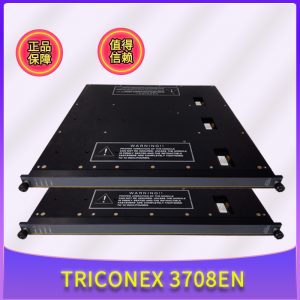
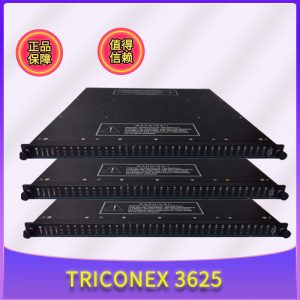
The HCU3805E sits within the communication and integration layer of a Triconex TMR safety controller. Its role is to maintain deterministic, high-integrity data exchange between safety processors and other system-level components, ensuring that safety-critical signals remain synchronized across all redundant controller paths. In the Tricon architecture, the controller modules manage logic execution, while this communication unit provides the secure transport channel that allows the three independent processing legs to share status, diagnostics, sequence data, and external interface information.
The module is designed around Triconex’s fault-tolerant communication architecture. This includes a high-speed, TMR-protected backplane communication interface that maintains strict data coherency across the system’s triple modular redundant processors. Internal isolation amplifiers and robust transient suppression components are used to ensure that noise on external wiring or cabinet power cannot propagate into the safety-critical logic environment. The communication subsystem includes multiple hardware watchdog timers and microprocessor self-diagnostics; if any abnormality is detected, the module isolates the faulty section and allows the remaining channels to continue operation without compromising system integrity.
From an engineering perspective, the HCU3805E solves several core reliability challenges in safety-instrumented systems. First, it ensures deterministic message delivery, removing timing uncertainty that could impair protective functions during emergency shutdown or high-speed trip sequences. Second, it minimizes single-point failures by adopting TMR-based redundancy and built-in diagnostic isolation. Third, the module provides a stable interface for integration with other DCS/PLC systems, enabling seamless communication for alarm management, data acquisition, shutdown signalling, and remote diagnostics.
These features make the HCU3805E particularly well-suited for industries where predictable and certified safety performance is mandatory. Its architecture supports high availability requirements and reduces commissioning complexity by providing clear signal-status visibility and standardized communication behaviour across system revisions.
Typical Application Scenarios
- Applied in petrochemical plants for emergency shutdown (ESD) and burner management communication between safety controllers
- Used in offshore platforms for synchronized trip logic between redundant Tricon safety racks
- Serves as an OEM-compatible replacement module for legacy 3805-series communication cards during system life-extension projects
- Supports power generation facilities in coordinating turbine protection systems with plant DCS networks
- Utilized in chemical processing units for high-integrity interface between SIS and process control networks under harsh environmental conditions
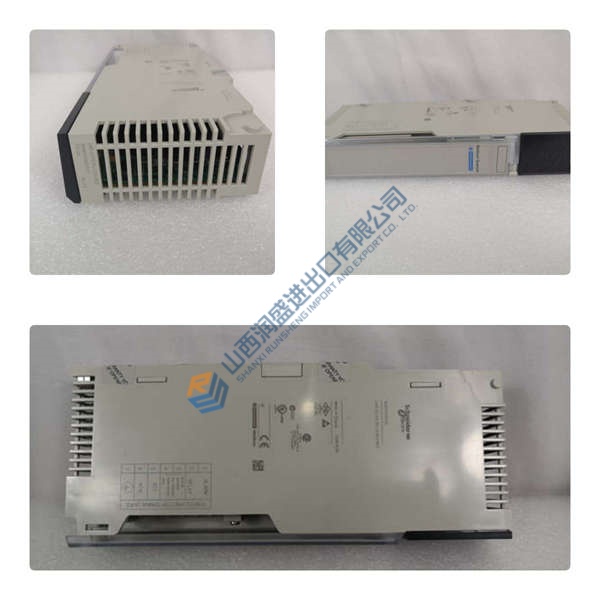
ADTECH SPIRENT 401311 GENERATOR + 400302A DS3 Interface
KAHN CERAMIC DIGITAL OEM HYGROMETER 75-1600-3-4
TOTAL CONTROL QPI31200E2P-B QPI31200E2P Quickpanel
BERGER LAHR VRDM 564/50 LNA Stepper Motor
Agilent 11970A HARMONIC MIXER 26.5-40GHz
DISCO Panasonic MAC998F FBPCB-0381 Motor Controller BD
OMRON SYSMAC CS1H-CPU65H CS1HCPU65H CPU Unit
GE Fanuc HE693THM409C Thermocouple Input Module
Fisher Scientific HI 100 100X 1.25
OMRON SYSMAC CS1H-CPU65-EV1 CPU65-V1 CPU Unit
Emulex HP LPE11002 4GB FC PCI-e HBA A8003-60001
GE Fanuc 90-30 PLC CPU323R IC693CPU323R 10 SLOT SYSTEM
ADLINK PCI-8124 Advanced 4-CH Encoder with HS Trigger
BALDOR DBSC102-GAAW AC SERVO DRIVE
MATROX Meteor II Multi-Channel METEOR2-MC/4
Mitutoyo M Plan APO 2 0.055 F=200
FUJI FH1016A VM1440A SIX CHANNEL COMMUNICATION BOARD
Metrology PL-LWDM20 /0.40 ∞ PLLWD Objectives Lens