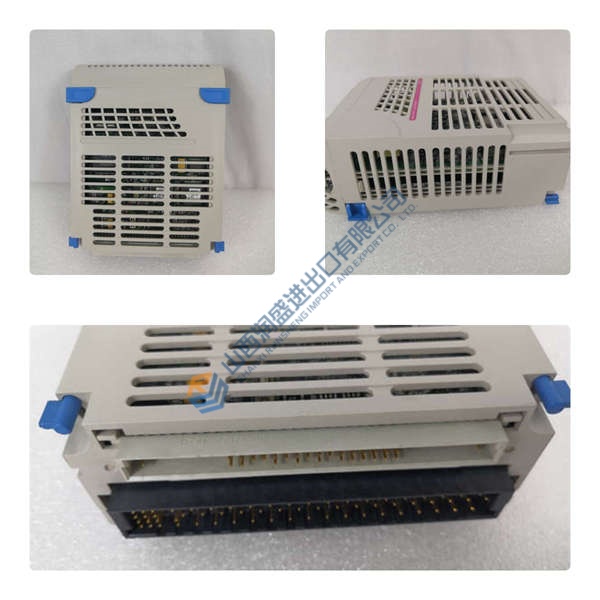
Description
Technical Architecture & Functional Positioning
(~450 words)
The HDS02.2-W040N-H is positioned within the mid-to-high-power axis control layer of the DIAX04 motion control platform. In a standard Rexroth Indramat architecture, HDS modules operate as digital servo power amplifiers responsible for converting DC bus energy into precisely modulated current waveforms for synchronous and asynchronous servo motors. Designed around an IGBT-based power stage, the unit delivers stable current control even during rapid axis reversals—critical for CNC machining centers, robotics joints, and high-precision material handling systems.
The module interfaces with a central command unit (typically a SERCOS-based motion controller or Indramat’s DDS drive controller) via the DIAX backplane. This architecture separates motion logic from power amplification, improving reliability and simplifying replacement. By keeping the power stage modular, system integrators can scale axis capacity simply by selecting an HDS module matched to the motor’s continuous and peak current demands.
Technically, the module uses high-speed current regulation loops combined with resolver or digital encoder feedback to maintain motor torque accuracy. This design reduces overshoot, ensures stable servo stiffness, and enables repeatable axis positioning tolerances essential for industrial machining and automated assembly processes. Motor thermal model monitoring (I²t) protects rotor and stator windings from overload conditions typical in aggressive acceleration cycles.
Real-world engineering value is derived from three aspects:
- Stability under dynamic load – High switching frequency and precise torque control maintain axis stability during cutting, pressing, or pick-and-place operations.
- Robust protection systems – Voltage, current, and thermal protection prevent damage to both the drive and the connected servo motor, reducing unplanned downtime.
- Modular maintenance – Technicians can replace the module without disturbing higher-level system configuration or re-wiring field devices.
Typical Application Scenarios
- Applied in CNC machining centers for high-precision spindle/axis control and fast interpolation cycles.
- Used in robotics for multi-axis servo control requiring high dynamic torque response.
- Supports industrial printing and converting machines requiring tight velocity regulation and synchronization.
- Serves as a direct replacement for aging Indramat DIAX04 HDS series drives, enabling retrofit without system redesign.
- Deployed in metal forming and hydraulic press automation, where rapid response and torque linearity are critical.