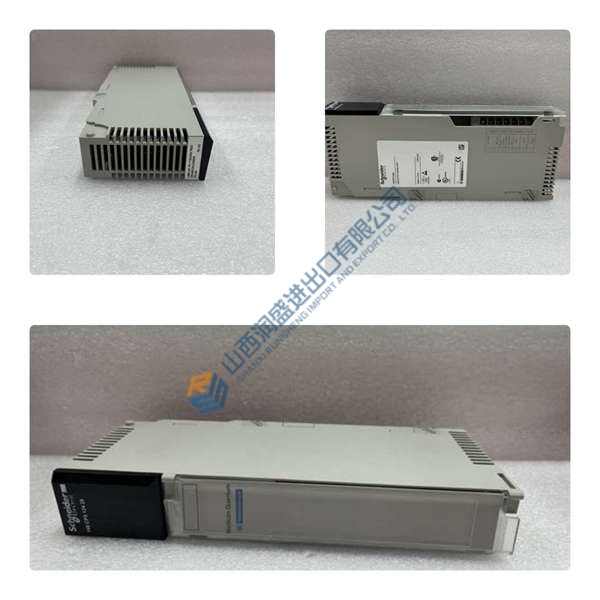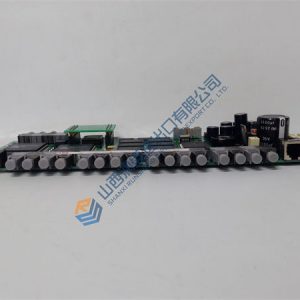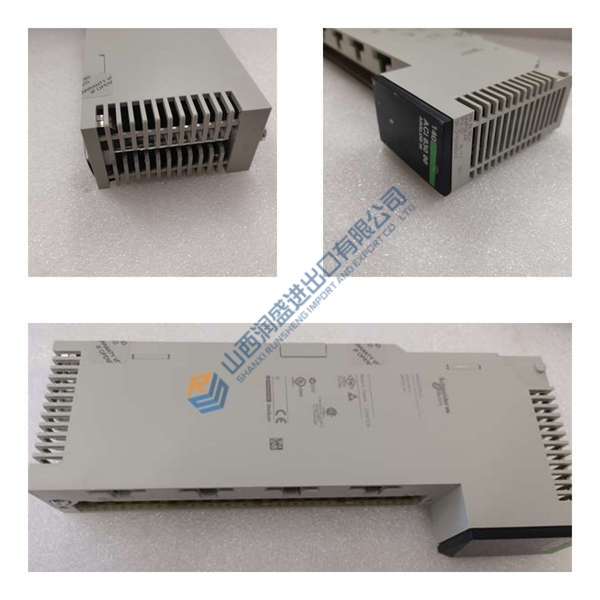
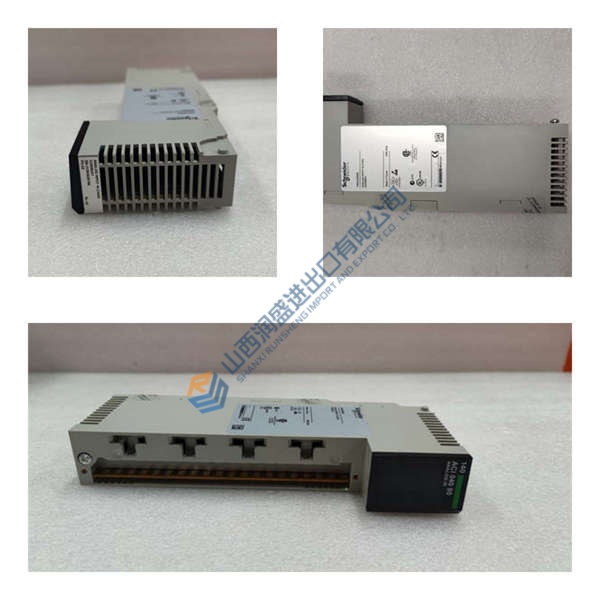
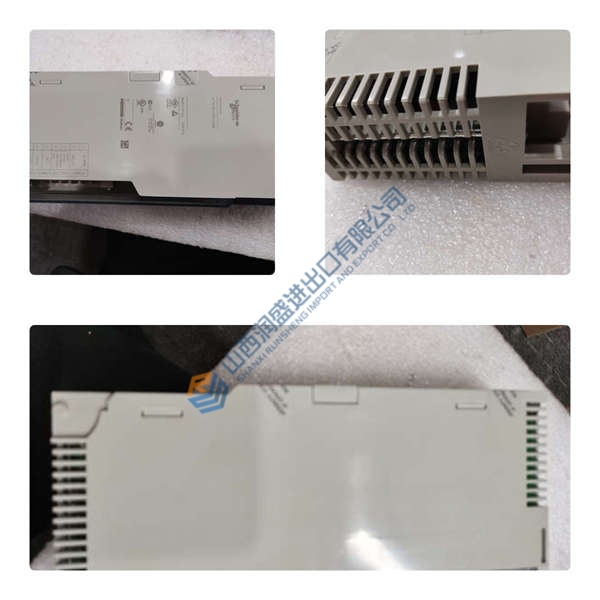
Description
Key Technical Specifications
- Product Model: HDS02.2-W040N-HS12-01-FW
- Manufacturer: Bosch Rexroth
- System Platform: DIAX04 Drive System
- Part Number: R911190006
- Rated Current: 40 A
- Peak Current: Up to higher values depending on duty cycle (typically 1.5-2x rated for short durations)
- DC Bus Voltage: 530 to 670 VDC
- Output Voltage: 3 x AC 0 to 500 V
- Output Frequency: 0 to 1000 Hz
- Power Consumption (Control Section): 20 W
- Cooling Method: Internal air cooling with built-in blower
- Communication Interface: SERCOS real-time optical fiber interface for deterministic command and feedback
- Weight: 6.5 kg
- Dimensions (H x W x D): Approximately 498 mm x 50 mm x 308 mm
- Protection Class: IP10 (open chassis for cabinet mounting)
- Operating Ambient Temperature: +5 °C to +45 °C (with rated data); up to +55 °C with derating
- Installation Altitude: Up to 1000 m above sea level without derating
- Certification Standards: CE marking; cULus listed (compliance with electrical safety and EMC directives)
Technical Architecture & Functional Positioning
Within the DIAX04 ecosystem, the HDS02.2-W040N-HS12-01-FW occupies the control layer as a modular, rack-mountable drive controller that converts DC bus power into variable-frequency three-phase output for servo motor actuation. Its hierarchical role involves receiving high-level motion commands from a master controller via the SERCOS ring and executing local closed-loop regulation, allowing distributed intelligence that reduces latency in multi-axis setups compared to centralized architectures.
The design leverages a high-speed digital signal processor for vector control algorithms, enabling field-oriented regulation that decouples torque and flux for superior dynamic response. The integrated SERCOS interface supports fiber-optic communication, providing noise-immune, deterministic data exchange with cycle times down to 1 ms—critical for synchronized motion in applications like CNC machining centers where phase alignment errors can compromise workpiece accuracy. The built-in blower ensures thermal management without external cooling loops, addressing heat dissipation challenges in densely packed control cabinets while maintaining a compact 50 mm width for high-density installations.
From a systems perspective, this module’s plug-in architecture with dedicated slots for auxiliary cards (e.g., additional I/O or encoder interfaces) solves scalability issues in evolving production lines, permitting field upgrades without full system redesign. It mitigates common engineering pain points such as electromagnetic interference through isolated power stages and optical communication, and simplifies commissioning via parameterized firmware that auto-configures motor data, reducing setup time and human error in complex servo networks.