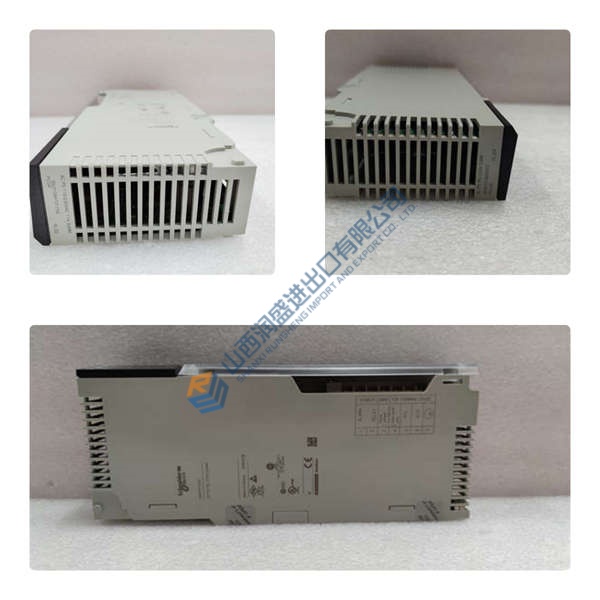
Description
Technical Architecture & Functional Positioning
(~450 words)
The Horner HE500TIU110 is part of the TIU (Text Interface Unit) Series, a compact operator interface platform designed for machine-level control systems. Positioned between simple indicator panels and full graphical OCS controllers, this device serves as the front-line human-machine interface for industrial automation applications where text-based communication is sufficient and a low-maintenance, durable HMI is required.
At the system architecture level, the HE500TIU110 communicates directly with PLCs or Horner OCS controllers to display machine states, alarm messages, production counters, operating parameters, and diagnostic alerts. Its communication capabilities include both RS-232 and RS-485, enabling compatibility with a wide range of industrial communication networks. The device uses TIU firmware designed to interpret various PLC registers, coil values, and memory addressing structures, providing direct access to machine variables from the front panel.
The HMI uses a ruggedized industrial LCD designed for long-term reliability in environments with vibration, temperature fluctuations, and electrical noise. The keypad provides tactile operation, allowing users to input parameters, navigate menus, and acknowledge alarms without requiring a touchscreen. This makes the terminal ideal for applications that require durable physical input—such as dirty, oily, or gloved environments.
The TIU110’s internal memory stores screens, messages, parameter menus, and operator prompts. Its ability to interface with multiple PLC brands makes it particularly valuable for legacy equipment where direct replacement HMIs are no longer in production. Because many older automation systems depend on text-based TIU interfaces, the HE500TIU110 serves as a critical component for restoring and maintaining legacy machine control systems.
In system integration, the HE500TIU110 acts as the operator-facing layer, mapping PLC data into readable formats while sending user commands back to the control system through serial communication. Its low power consumption, compact panel cutout requirements, and stable firmware design allow it to operate reliably for years with minimal maintenance.
Typical Application Scenarios
- Legacy machine HMI replacement for systems using TIU-series interfaces
- Small or mid-sized industrial equipment requiring a simple text-based operator display
- Packaging equipment, conveyors, batch process systems, and forming machines
- OEM machines designed around Horner TIU architecture
- PLC-based equipment requiring keypad entry—setpoints, counters, machine modes
Quality Standards & Testing Procedures
(~450 words)
Every HE500TIU110 unit goes through a structured SOP testing process, designed to ensure full compatibility with legacy TIU systems and serial PLC communication environments.
Initial Inspection
Technicians perform visual checks on:
- Display clarity and backlight quality
- Keypad tactile response
- Connector integrity
- PCB inspection for heat marks, corrosion, or prior non-OEM repairs
- Communication port structural integrity
Electronic Power-Up Validation
The unit is powered using a regulated 24 VDC source to validate:
- Stable power-on sequence
- LCD contrast and text rendering consistency
- Backlight uniformity
- Menu navigation responsiveness
Communication & Protocol Testing
The HMI is connected to a PLC simulator and tested against:
- RS-232/RS-485 electrical stability
- TIU protocol handshake
- Modbus polling and register mapping
- Multi-speed baud rate communication
- Error handling and timeout behavior
Functional Programming Test
A sample TIU configuration is loaded to verify:
- Screen transitions
- Parameter entry correctness
- Alarm acknowledgment procedures
- Memory write/restore functionality
- Non-volatile storage reliability
Long-Duration Burn-In
A multi-hour burn-in cycle is executed to validate operation under continuous load, ensuring stable performance without contrast fade, processor lockups, or serial communication failure.
Units meeting all test criteria receive a complete QC package with firmware confirmation and test results.