Description
Key Technical Specifications
- Product Model: HID2082
- Manufacturer: Pepperl+Fuchs
- Signal Type: Analog input converter / isolation barrier
- Channels: 2 independent measurement channels
- Input Types: Thermocouple (B, E, J, K, N, R, S, T, L, TXK, TXKH, TXA); RTD sensors (Cu10–Cu100, Pt10–Pt1000, Ni100); potentiometer 0.1–20 kΩ; millivolt signals –100 … 100 mV
- Output Signal: Linearized analog (0/4 … 20 mA current or 0 … 5 V / 1 … 5 V voltage)
- Supply Voltage: 20.4 … 30 V DC (bus powered)
- Power Consumption: ≤ 1.95 W
- Safety Integrity Level: SIL 2 per IEC 61508 / IEC 61511
- Sensor Fault Detection: Sensor breakage and short-circuit detection
- Line Fault Detection: LFD fault reporting with configurable outputs
- Configuration: DIP switches and PACTware™ software support
- Galvanic Isolation: Safe separation between input, output, and power domains
- Operating Temperature Range: –20 °C to +60 °C
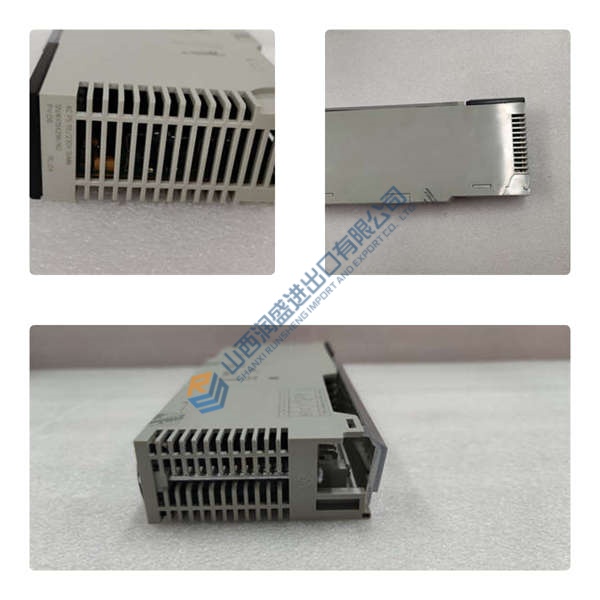
- Ingress Protection: IP20 enclosure suitable for control cabinet installation
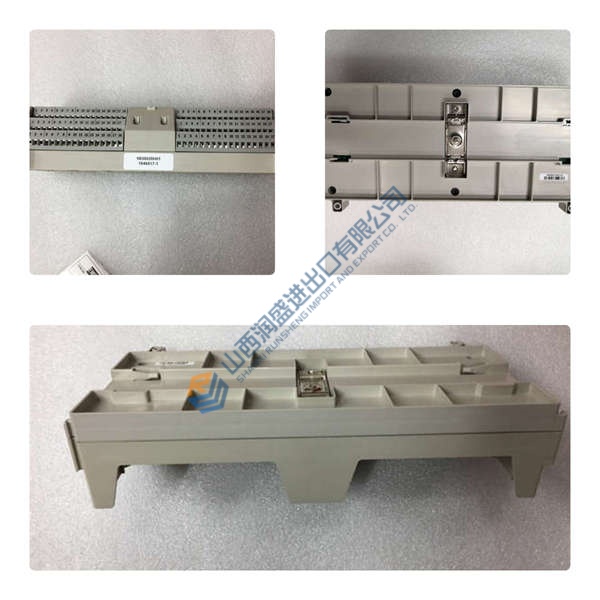
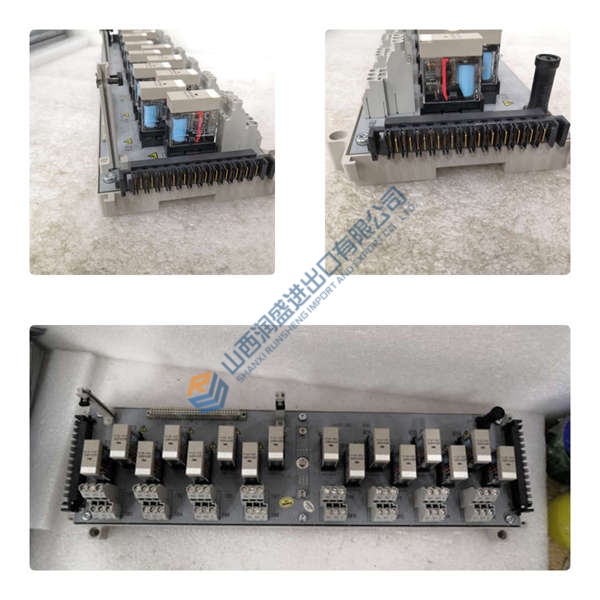
- Mounting: Mounts on a compatible termination/rail base
Technical Architecture & Functional Positioning
The HID2082 from Pepperl+Fuchs is engineered as a dual-channel isolated temperature converter and signal conditioner, tailored for industrial automation environments where reliable temperature measurement and intrinsic safety are priorities. Its architecture centers around converting low-level sensor signals (thermocouples, RTDs, potentiometers and millivolt references) into stable, linearized analog outputs suitable for process controllers, DCS analog input cards, or safety PLCs. The dual-channel design enables two independent measurements or one input with dual isolated outputs, which is invaluable when redundant monitoring or parallel subsystem feeding is needed.
From an engineering standpoint, the module blends precision analog front-end circuitry with robust digital calibration and linearization algorithms. Input conditioning adjusts for sensor characteristics—particularly thermocouple cold junction compensation—ensuring accurate temperature representation across a wide range of sensor types per international standards. The internal conversion is followed by a selectable output stage, capable of sourcing or sinking current 4–20 mA or driving 0–5 V/1–5 V signals, matching common process control and analog acquisition requirements.
Critical to industrial and safety-oriented installations is the isolation and functional safety performance. The HID2082 implements galvanic isolation between the hazardous field side and the safe control side, mitigating ground loops and protecting downstream instrumentation from transient disturbances. The module meets SIL 2 functional safety standards under IEC 61508/61511, qualifying it for use in safety instrumented systems (SIS) where failure rates and diagnostics are rigorously defined.
The module’s diagnostic capabilities extend beyond simple conversion: it continuously monitors sensor integrity, detecting wire breaks or shorts, and reports these conditions via both analog output deviation and a dedicated fault output. Line Fault Detection (LFD) further assists in identifying wiring issues, critical for minimizing unplanned downtime and enabling predictive maintenance workflows. Configuration is flexible via DIP switches or PACTware™ software, enabling field engineers to tailor input ranges, output modes, and diagnostic behavior to application needs without extensive rewiring.
Typical Application Scenarios
- Isolated temperature signal conversion for DCS and PLC analog acquisition
- Hazardous area temperature measurement requiring intrinsic safety and SIL 2 compliance
- Dual-channel temperature monitoring for redundant control loops
- Process control in chemical, energy, power generation, and industrial manufacturing
- Integration into safety instrumented systems where sensor fault reporting is essential
Quality Standards & Testing Procedures
Quality Philosophy
Accurate and reliable temperature measurement is foundational for robust process control. The HID2082’s role in translating field sensor data to control logic demands confidence in precision, noise immunity, and failure detection. Quality validation emphasizes functional accuracy, diagnostic responsiveness, and safety compliance across variable industrial conditions. Each unit is subjected to a detailed test protocol prior to shipment to document performance against key quality metrics.