Description
Verify exact firmware group build and chassis revision against the project TriStation 1131 database and OEM Planning & Installation Guide before installation.
Product Introduction
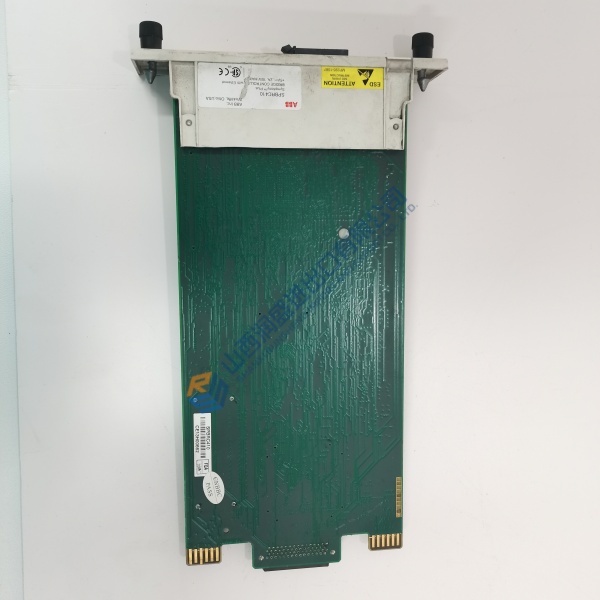
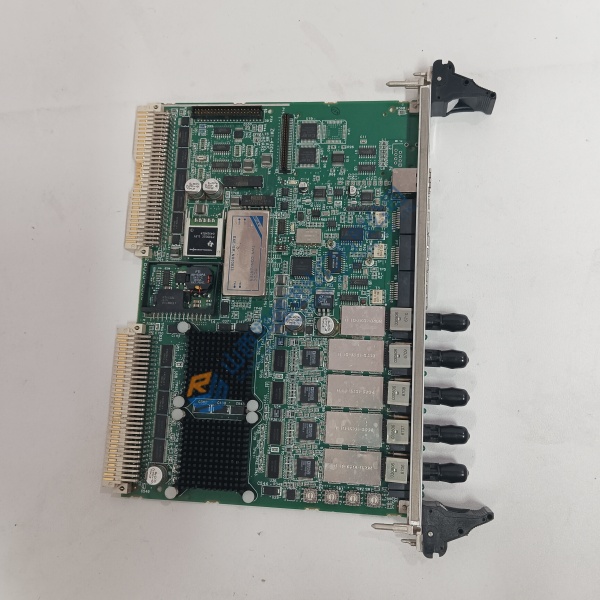
In a Tricon chassis the three main processors form the voting core of every safety loop. The Triconex MP3009 sits in that slot for v9–v11 systems and runs the application logic, performs continuous self-tests, and drives the TriBus majority vote.
Sites still running older 3008 processors often move to this unit when scan time or memory headroom becomes tight. Typical logic power draw stays at 14 W and the dual-core 800 MHz P1021 gives measurable reduction in scan time on large ESD or F&G applications; always confirm the exact firmware revision against the installed project before the swap.
Key Selling Points & Differentiators
- Dual-core 800 MHz QorIQ P1021 with 256 MB DRAM and 128 MB Flash supports larger cause-and-effect matrices than the preceding 3008 generation while keeping logic power at 14 W.
- Full TMR architecture with continuous online diagnostics and hot-swap capability under power; majority voting masks single-channel faults without process interruption.
- Clear difference versus a 3008: higher TriBus speed potential (up to 1000 Mbps in 8120E chassis) and expanded memory; not a drop-in for every legacy chassis without firmware and node-address checks.
- Not recommended for new green-field designs that can use current Trident TCM platforms; this module is intended for installed Tricon v9–v11 bases that must stay on the existing hardware platform.
- Every unit follows a documented QC sequence: incoming visual and serial verification, live power-on and communications handshake on a Tricon test rack, firmware revision readout, and final ESD packaging with dated QC label. Test report available on request.
- Complies with the diagnostic coverage expectations of IEC 61508 SIL 3 when installed and maintained per the OEM safety manual.
Frequently Asked Questions
Can I drop this straight in for a failed 3008?
Depends on the chassis and firmware family. The physical slot is the same, but node address switches (SW1/SW0), firmware group build, and TriBus speed rating of the chassis must match. Read the existing module’s firmware and switch settings before removal; mismatch forces a full download and possible mode change.
What firmware revision ships on a stock unit?
We record the exact firmware group build number at incoming inspection and again after functional test. Request the recorded revision against your TriStation project before purchase. If a specific build is required, state it; otherwise the unit ships as received from the supply chain after verification.