Description
Product Introduction
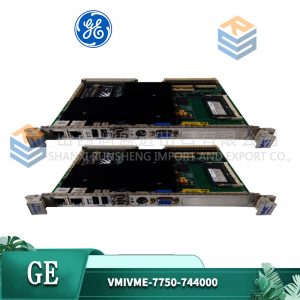
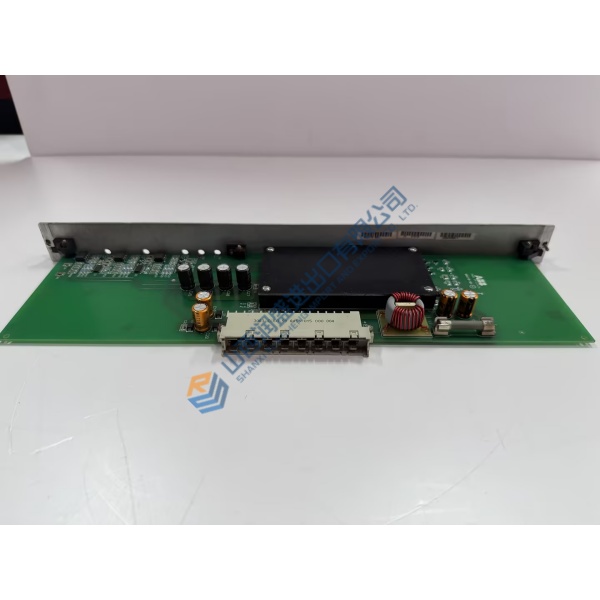
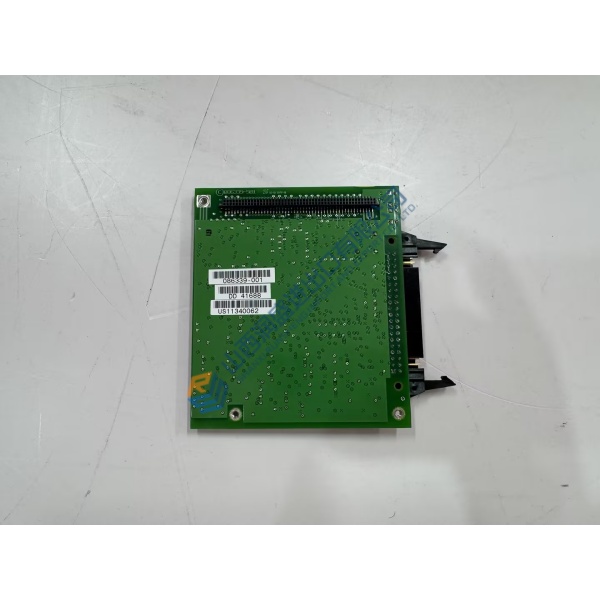
GE V7768-320000 is a high-performance 3U VMEbus single board computer designed for demanding industrial automation, defense, and process control systems. Powered by an Intel Core Duo processor, this processing unit executes complex real-time control algorithms while maintaining low thermal output. It integrates seamlessly into existing VME64x backplanes to handle intensive data acquisition and communications.
This module features high-speed dual Gigabit Ethernet interfaces alongside flexible PMC expansion capabilities. It offers full backward compatibility with legacy 3U VME architectures, reducing system retrofitting costs and extending the operational lifecycle of critical control racks.
Quality Control & Inspection Process
Surplus hardware requires strict verification before deployment. Every unit undergoes a rigorous 5-step quality assurance workflow:
- Inbound Inspection: Verify origin documentation and check serial numbers against OEM databases. Visually inspect PCB traces, edge connectors, and surface-mount components for hairline fractures, solder bridges, or atmospheric oxidation.
- Live Functional Testing: Install the module into a dedicated 3U VME test chassis. Run power-on self-tests (POST), perform communications handshakes over Gigabit Ethernet, and execute full-scale I/O verification under real-time OS simulation for over 24 hours.
- Electrical Testing: Conduct insulation resistance checks using a 500 V Megger (verifying >10 MΩ threshold) and test grounding continuity across all shield points.
- Firmware & Configuration: Read and log the exact BIOS and firmware builds. Archive configuration profiles and record all onboard jumper positions.
- Final QC & Packaging: Seal the board in static-shielding metallic bags with desiccant. Pack in high-density foam framing with a clear QC Passed verification seal.
Technical Pitfall & Installation Guide
Avoid common integration mistakes during field replacement:
- Firmware Rev Mismatch: Newer revision boards may fail to communicate with legacy VME backplane bridge controllers or custom real-time OS builds. Record the exact BIOS/firmware build of the faulty module before extraction.
- DIP Switch / Jumper Configuration: Incorrect onboard jumper settings for memory mapping or VME bus arbitration will cause immediate bus errors (BERR). Photograph and match every jumper position on the existing board before applying power.
- Terminal / Pinout Differences: Verify backplane wiring and P2 connector mapping. Similar 3U SBC models often route custom serial or PMC I/O to different pin sets on the backplane.
- Power Supply Margin: Dual-core processors exhibit current spikes during boot cycles. Ensure the +5 VDC rail on the system power supply retains at least a 20% current headroom margin to prevent brownout resets.
- ESD Risks: CMOS components on this module tolerate very low electrostatic discharges. Always wear a grounded anti-static wrist strap during handling to avoid latent semiconductor damage.
Frequently Asked Questions
Q: Does the GE V7768-320000 support hot-swapping in an active VME backplane? A: No, standard 3U VMEbus backplanes do not support live insertion. Removing or inserting this module while the backplane power supply is active can cause high-current transients that destroy the edge connector pins and crash the bus. Always power down the chassis completely before replacement.
Q: Is this board obsolete, and what are the upgrade paths? A: Yes, this hardware series is classified as mature/obsolete by the OEM. However, direct fit-form-function replacements are available in surplus inventory. Upgrading to newer architectures typically requires updating the underlying operating system drivers and modifying PMC carrier mapping, making direct surplus replacement the most cost-effective solution.
Q: Will replacing this CPU board erase my application software? A: Honestly, application code stored on the system’s CompactFlash card or remote server remains safe. However, volatile onboard RAM settings and real-time clock parameters clear once power disconnects. Transfer the physical CompactFlash card from the old unit to the replacement, or reflash the OS image to maintain system operation.
Q: Are these modules sourced as factory-new or tested surplus? A: Most available stock consists of New Surplus—unused spare inventory originating from plant retrofits, original panel builders, or system integrators. In our experience, high-grade surplus units undergo identical electrical and functional testing as factory-new items, offering identical operational reliability at a lower acquisition cost.