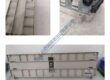
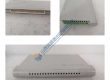
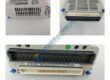
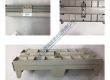
Product Core Brief
- Model: CP-451 (Style Part Number: C2K20006H)
- Brand: YOKOGAWA
- Series: CENTUM CS 3000 / CENTUM VP DCS Series
- Core Function: Processes high-reliability process control logic and coordinates system bus communications.
- Type: Processor / CPU Controller Module
- Key Specs: Dual-redundant bus support, high-speed control loop execution, industrial DCS backplane integration
- Condition: New Original (New Surplus) — not refurbished
Product Introduction Facing hardware fault alerts on your DCS control node? Integrating the YOKOGAWA CP-451 C2K20006H processor module restores full deterministic control execution across continuous process lines.
This controller executes complex batch and continuous control loops, maintaining stable communication over Vnet/IP or HF-bus networks. Operating this unit inside chemical or refining facilities reduces loop scan jitter to sub-millisecond tolerances.
Key Technical Specifications
- Manufacturer: Yokogawa Electric Corporation
- Part Number: CP-451
- Style Number: C2K20006H
- System Family: CENTUM CS 3000 / CENTUM VP
- Module Type: Processor Module (CPU)
- Operating Voltage: 24 V DC system backplane power
- Redundancy Support: Dual-redundant configuration supported
- Operating Ambient: 0 °C to +50 °C
- Storage Temperature: −20 °C to +60 °C
- Humidity Limits: 10% to 90% RH (non-condensing)
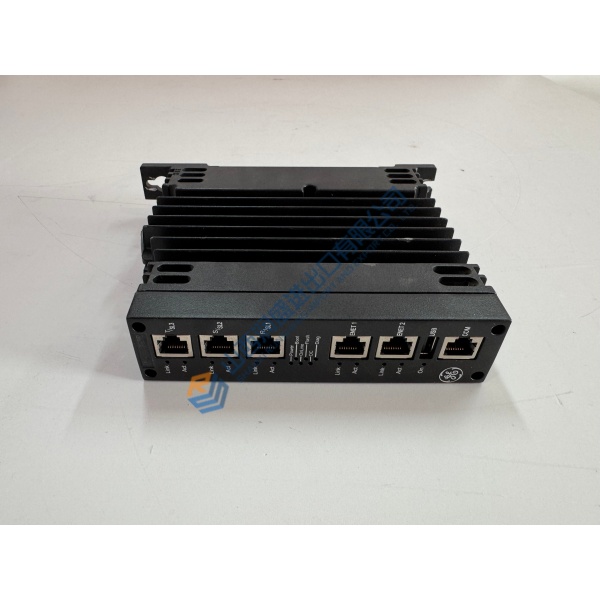
Installation & Configuration Guide
Phase 1 — Pre-Installation (est. 10 min) Shut off supply power breakers feeding the target node rack. Wait 5 full minutes for internal rack power supply capacitors to discharge safely. Gather ESD wrist straps, terminal tools, and a Fluke 115 multimeter. Export current system generation parameters and database files from the CENTUM engineering workstation. Photograph current module slot locations, node address settings, and cable terminations.
Phase 2 — Removal (est. 5 min) Disconnect communication cables by squeezing retaining clips gently. Unscrew top and bottom rack retention screws securing the module. Pull the old module straight out along backplane guide rails, taking care not to twist or force the card edge connectors.
Phase 3 — Installation (est. 10 min) Equip your ESD wrist strap prior to opening protective packaging. Verify module labels confirm the YOKOGAWA CP-451 C2K20006H matches your existing hardware specification and style code. Slide the module smoothly along backplane guide slots until the rear connector seats firmly into the backplane bus. Tighten top and bottom retention screws to ~0.5 N·m.
Phase 4 — Power-On & Testing (est. 15 min) Supply power to the rack; verify control voltage sits within 24 V DC ±10%. Observe front panel LEDs: confirm RDY indicator lights solid green while ERR lights remain dark. Establish connection from your CENTUM engineering station, download system configuration files, and verify online status for the node. Monitor continuous execution for 30 minutes, checking system diagnostic event logs before recording the hardware replacement in plant maintenance records.
Troubleshooting Quick-Reference
- RDY LED Dark: Check 24 V DC backplane power supply level and verify backplane connector seating.
- ERR LED On / Flashing: Firmware mismatch or memory failure; perform cold restart or reload node configuration.
- Bus Fail LED On: Verify Vnet/HF-bus cable connections and check bus line termination switches.
FAQ Can I just drop this in and go? No, you cannot perform a hot drop without initial workstation checks. While inserting the YOKOGAWA CP-451 C2K20006H into the backplane takes minutes, verifying software node addresses and system generation parameters via the CENTUM engineering station is required. Running unconfigured DCS hardware leads to node communications offline errors.
My system uses older CENTUM CS 3000 hardware — will this work? Yes, provided your node nest configuration supports CP-451 series processor cards. Well, technically it interfaces across standard CS 3000 nests, but only if installed system software version releases support this specific card revision.
Is the listed price fixed? Listed pricing functions purely as reference market baselines. Actual cost depends on global availability, market conditions, and shipping requirements. Guide your purchasing department to request a formal quote directly for volume pricing and actual freight terms.
What lead times apply for urgent plant shutdown needs? Units ship from warehouse stock within 24 to 48 hours following order confirmation. Standard air express delivers in 3 to 5 business days globally, while emergency freight routing covers major industrial hubs faster.