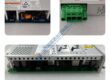
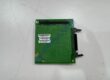
Product Core Brief
- Model: 3722X (Tricon Model 3722X)
- Brand: Triconex / Schneider Electric
- Series: Tricon v10 / High-Density Safety Instrumented System (SIS)
- Core Function: Receives process transmitter current signals and executes triple-modular redundant (TMR) signal processing for safety shutdown loops.
- Type: High-Density Analog Input (AI) Module (0–10 V / 4–20 mA)
- Key Specs: 32 differential channel capacity, Triple Modular Redundant (TMR) architecture, SIL 3 safety rated
- Condition: New Original (New Surplus) — not refurbished
Product Introduction Struggling with channel fault alarms or signal voter mismatches halting your emergency shutdown (ESD) or burner management system (BMS)? Installing the TRICONEX 3722X High-Density Analog Input Module restores full Triple Modular Redundant (TMR) fault tolerance across critical Tricon v10 safety systems.
This module processes incoming analog process signals across three isolated channels, executing majority-voting logic onboard to eliminate single points of failure. Operating this card inside chemical processing or oil and gas refining facilities ensures process variables remain monitored down to sub-millisecond scan rates without triggering false trips.
Key Technical Specifications
- Manufacturer: Triconex (Invensys / Schneider Electric)
- Model Code: 3722X
- Product Line: Tricon v10 High-Density Series
- Module Type: Triple Modular Redundant (TMR) Analog Input Module
- Input Channels: 32 differential channels, DC isolated
- Input Signal Range: 0 to 5 V DC or 0 to 10 V DC (4–20 mA via external termination panel resistors)
- Resolution: 12-bit analog-to-digital conversion
- Safety Integrity Level: SIL 3 certified (IEC 61508)
- Power Dissipation: < 10 W nominal
- Operating Ambient: 0 °C to +60 °C
- Ingress Protection: Standard backplane chassis mount
Installation & Configuration Guide
Phase 1 — Pre-Installation (est. 10 min) Obtain hot-work and safety system maintenance permits before opening safety instrumented system cabinet doors. Ensure secondary redundant modules are healthy if hot-swapping under live conditions. Gather your ESD wrist strap, slot screwdrivers, and a Fluke 115 multimeter. Export current TriStation 1131 safety system project files and verify hardware slot allocation. Photograph backplane slot positions, field wiring termination panels, and module retaining latches prior to unmounting hardware.
Phase 2 — Removal (est. 5 min) Locate the target module in the Tricon main or expansion chassis. Disengage the top and bottom ejector levers simultaneously to unseat the module connectors from the active backplane. Slide the old 3722X module straight out along chassis guide rails, supporting the base of the card to prevent physical shock.
Phase 3 — Installation (est. 10 min) Equip your ESD wrist strap prior to removing the replacement module from its protective anti-static bag. Confirm part numbers on the side module label match TRICONEX 3722X exactly. Align the module with top and bottom chassis guide rails, sliding it in until ejector handles engage the frame. Firmly press both ejector levers flat to lock internal backplane connectors into position, then torque retention thumb screws to ~0.5 N·m.
Phase 4 — Power-On & Testing (est. 15 min) Observe front panel status LEDs during the self-test sequence: verify the “PASS” LED illuminates solid green while “FAULT” and “MAINT” LEDs remain unlit. Connect via TriStation 1131 software, check module status in system diagnostics, and verify channel voting state integrity across all 32 inputs. Execute live loop verification checks on select 4–20 mA transmitters to confirm analog reading accuracy. Monitor module operation for 30 minutes before recording replacement details in SIS maintenance logs.